The landscape of children's media consumption has changed dramatically. Here's what the latest research tells us about how kids interact with media today.
Key Statistics at a Glance
Screen Time by Age
- Ages 0-2: Average 49 minutes per day (AAP recommends avoiding screens except video calls)
- Ages 2-4: Average 2.5 hours per day
- Ages 5-8: Average 3 hours per day
- Ages 8-12: Average 4-6 hours per day
- Teens 13-18: Average 7-9 hours per day (excluding schoolwork)
Platform Usage
- YouTube: 89% of children ages 5-15 use YouTube regularly
- Streaming Services: 78% of households with children subscribe to at least one streaming service
- Gaming: 76% of children under 18 play video games
- Social Media: 54% of children have accounts before age 13 (minimum age requirement)
Content Exposure Concerns
Inappropriate Content Encounters
Research from Common Sense Media and other organizations reveals:
- 56% of children ages 10-15 have encountered violent content they found disturbing
- 47% of parents report their child has accidentally accessed age-inappropriate content
- 38% of kids have seen sexual content online before age 11
- 65% of parents feel overwhelmed trying to monitor their children's media
Impact on Development
Sleep Disruption
- Children with screens in bedrooms get 20-30 minutes less sleep per night
- 42% of teens report checking devices during the night
Attention and Focus
- Fast-paced media linked to reduced attention span in children under 6
- Heavy media users show 11% lower academic performance
Emotional Well-being
- More than 3 hours of social media daily linked to higher rates of anxiety and depression
- Exposure to violent media associated with increased aggressive thoughts (not necessarily behavior)
The Good News
Media isn't all negative. When used appropriately:
- Educational content can accelerate learning by 17% in core subjects
- Co-viewing with parents increases comprehension by 40%
- Quality programming (like PBS, educational apps) associated with improved vocabulary
- Gaming can improve problem-solving skills and spatial reasoning
What Parents Can Do
1. Set Clear Boundaries
Establish screen-free times (meals, before bed) and zones (bedrooms).
2. Co-View and Discuss
Watch with your children and talk about what you see. This increases comprehension and allows you to address concerning content.
3. Use Content Screening Tools
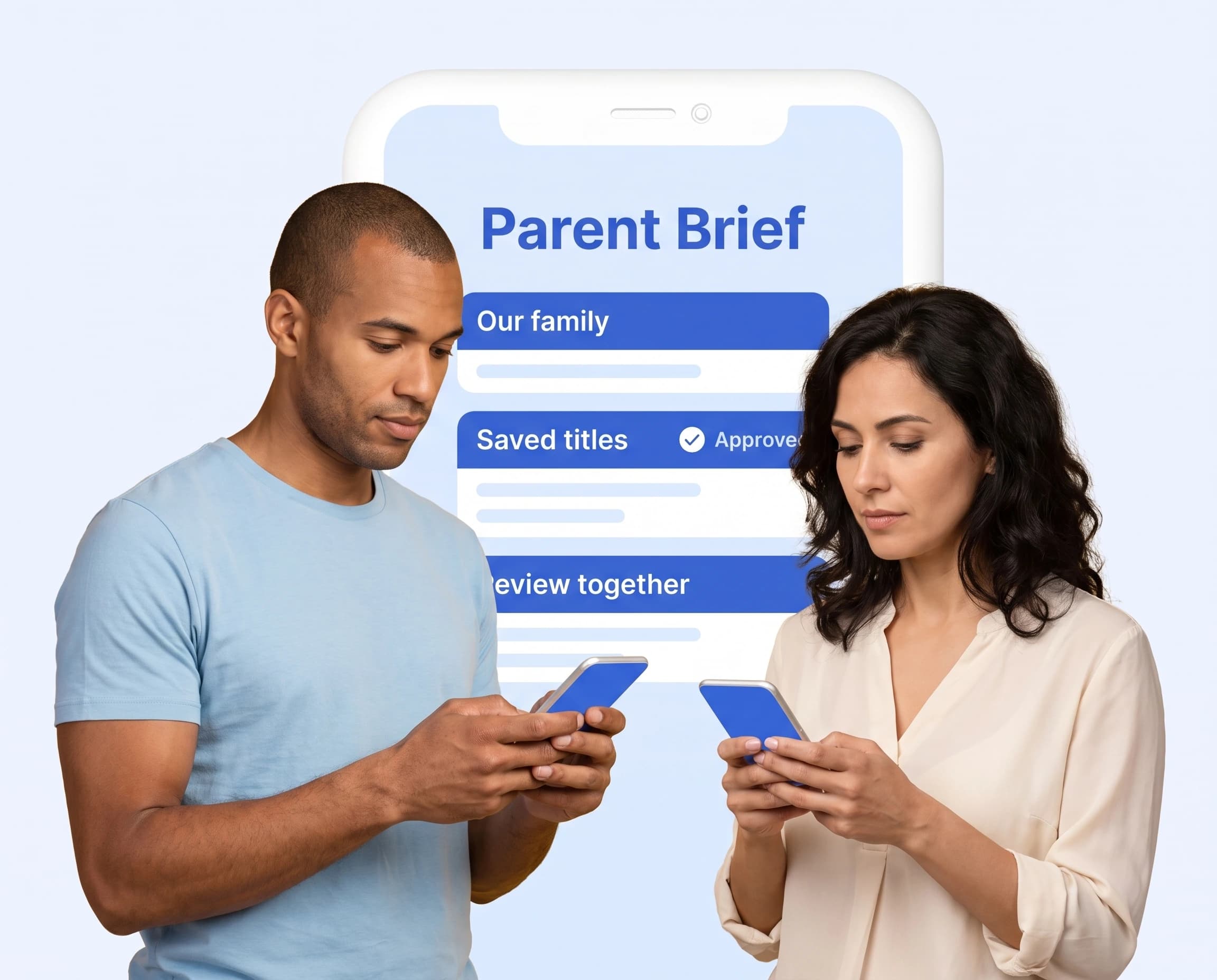
Services like ParentBrief help you preview content before your children access it, giving you detailed breakdowns of themes, violence, language, and age-appropriateness.
4. Model Good Behavior
Children mimic parents. Your own screen habits influence theirs.
5. Focus on Quality Over Quantity
Not all screen time is equal. Educational, interactive content is better than passive consumption.
Age-Specific Recommendations
| Age Group | Daily Limit | Best Practices |
|---|---|---|
| Under 2 | Avoid (except video calls) | Focus on interactive play |
| 2-5 | 1 hour max | High-quality programming only, co-view |
| 6-12 | 1-2 hours | Balance with physical activity, homework first |
| 13+ | Set together | Negotiate limits, maintain open dialogue |
The Bottom Line
Media is an inevitable part of modern childhood. The goal isn't elimination—it's informed, intentional use. By understanding what your children are consuming and making conscious choices about content, you can harness the benefits while minimizing the risks.
Sources: American Academy of Pediatrics, Common Sense Media, Journal of Pediatrics, Nielsen Media Research, Pew Research Center
Last updated: February 2026